Fully-Open Windows, Compliant Homes
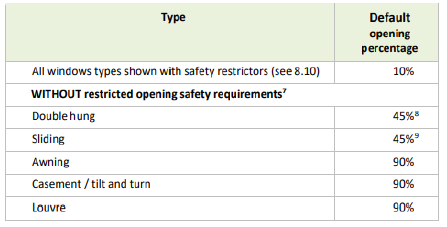
KidScreen fall-prevention screens let you model bedroom windows at full openability in NatHERS (avoiding the default 10% restriction), improving natural ventilation, lowering cooling loads and reducing the need for higher-performance glazing — while meeting NCC fall-protection rules and AS5203 testing requirements.
Why KidScreen matters for NatHERS assessments
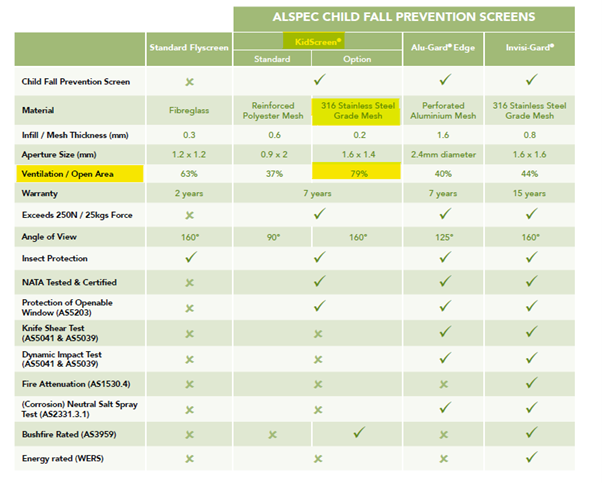
Alspec’s KidScreen range is specifically designed and tested to meet the Protection of Openable Windows standard (AS5203) and the NCC fall-prevention requirements; the product brochure lists benefits such as preventing accidental falls, allowing full window ventilation, easy adult egress, and NATA testing/certification. KidScreen is available in reinforced polyester and a 316 stainless-steel mesh option that is explicitly promoted for greater visibility and airflow.
Regulatory context you must model to
The NCC 2022 requires protection for openable bedroom windows where the fall to ground is ≥2 m, and allows protection to be provided by a screen that resists 250 N and prevents a 125 mm sphere passing through. Where a complying screen is absent, NatHERS assessors must use a default openability of 10% for affected windows unless the design documentation specifies otherwise.
How KidScreen changes the NatHERS modelling outcome
Because KidScreen stainless‑steel mesh meets the AS5203/NCC performance tests, designers can note on plans that windows with a fall ≥2 m are fitted with compliant KidScreen screens and therefore model the windows at their actual (maximum) openability rather than the 10% default. The stainless option has a much higher open area (manufacturer data shows up to ~72% open area for the stainless mesh), which directly increases modeled ventilation capacity.
Thermal and health benefits (evidence-based)
Greater window openability increases natural ventilation, which reduces indoor overheating hours and can cut cooling energy use substantially in mixed‑mode operation — studies show larger openable areas and appropriate shading can halve overheating hours and energy use in some climates. Good natural ventilation also reduces stagnant air and the risk of mould growth, improving indoor air quality and occupant health and wellbeing.
Cost and compliance advantages
From a construction and compliance perspective, screens are typically much cheaper than upgrading glazing or installing high-performance windows. By enabling higher modeled openability and lowering heating/cooling loads, KidScreen can help raise a NatHERS star rating and reduce the need for more expensive glazing upgrades — a practical route to both cost savings and compliance.
Practical notes for designers and assessors
- Document the use of KidScreen (product, mesh type and certification) on the drawings and in the NatHERS notes so assessors can justify non‑default openability in the model.
- Ensure installation is by a certified installer and that the screen’s test certificates (AS5203 / NATA) are available for compliance records.
- Consider pairing full‑openability windows with ceiling fans or cross‑ventilation strategies to maximise thermal comfort and reduce mechanical cooling demand.
https://ncc.abcb.gov.au/guide/d3d29-protection-openable-windows